
Fake Delft Pottery Marks: How to Spot a Reproduction
By Linda · · 7 min read
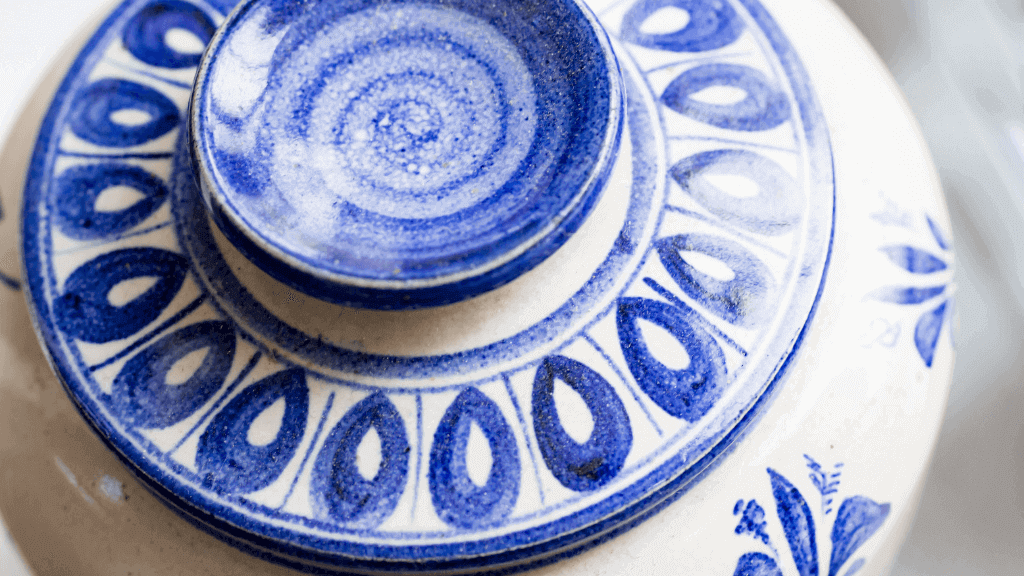
The fastest way to spot fake Delft is to flip the piece over and study the mark. A genuine mark is painted by hand, so it shows slight wobble and uneven line weight. A fake mark is usually stamped or printed, looks machine-crisp, and often reads just “Delft” or “Delft Blue” with no actual factory behind it.
That word alone is not a maker’s mark. “Delft” and “Delfts Blauw” describe a style, not a workshop. Genuine Delftware tells you who made it, when, and which painter held the brush. If the base only says “Hand Painted Delft Blue” under a perfect printed scene, you’re holding decorative ware, not antique Delft.
What a Genuine Delft Mark Looks Like
Real Delftware carries a workshop mark, and the most familiar one belongs to De Porceleyne Fles, better known as Royal Delft. The factory was founded in 1653 and still operates, so its mark is well documented.
On a genuine Royal Delft piece you should find:
- A small painted jar or bottle emblem
- The initials “JT” (for Joost Thooft, who revived the factory in the 1870s)
- The word “Delft” beneath the emblem
- The painter’s personal initials, painted by hand
- A letter-based year code that dates the piece
Other legitimate Dutch makers used their own named marks, sometimes paired with “Delfts” or “Made in Holland.” The common thread is that the mark is painted, so it carries the small irregularities of a human hand. I walk through the full method in how can you tell real Delft pottery.
One thing that trips people up: not every antique Delft piece is marked. Plenty of 17th- and 18th-century workshop pieces left unsigned. An unmarked piece is not automatically fake. It just means the mark can’t help you, and you have to lean on the glaze, the body, and the painting instead.
The Red Flags of a Fake Delft Mark
Reproductions and tourist ware give themselves away in a handful of repeating ways. These are the marks I treat as warning signs.
- The word “Delft” stamped as a generic label. No emblem, no painter’s initials, no year code. Common on Dutch souvenir ware and East Asian reproductions sold as “Delft style.”
- A printed or transfer mark that’s too crisp. Hand-painted marks have uneven strokes. A mark with perfectly uniform line weight was printed, which a genuine workshop mark never is.
- “Hand Painted Delft Blue” decals. The irony writes itself. A decal claiming the piece is hand-painted is the opposite of hand-painted.
- A suspiciously clean, white base. Traditional Delft is tin-glazed earthenware, so a chip should reveal buff or reddish clay. A bright white body usually means modern porcelain or whiteware, not Delft.
- A copied Royal Delft mark on poor painting. Forgers add the famous jar emblem to mediocre pieces. If the painting quality doesn’t match the reputation, doubt the mark.
A genuine factory mark and a careless reproduction can sit side by side at the same flea market table. The mark is your first filter, not your last word.
Read the Mark, Then Check the Painting and Glaze
A mark on its own is never enough. Forgers know which marks people look for, so I always weigh the mark against the decoration and the glaze. They have to agree.
The single most reliable test costs next to nothing: a loupe or magnifying glass.
- Hand-painted (genuine): brushstrokes vary in width, blue tones shade from light to dark inside a single stroke, and repeated motifs are never identical. You can sometimes feel a faint ridge where the cobalt sits thick.
- Transfer-printed (imitation): under magnification you’ll see a fine pattern of dots or a screen texture, like a newspaper photo. Repeated elements match each other exactly.
Then check the body. Real Delftware is earthenware under a thick, opaque tin glaze, fired low like most earthenware (roughly cone 06 to 04, about 1,828 to 1,945°F / 998 to 1,063°C). That construction leaves clues:
- Chips at the rim or footring reveal buff, yellowish, or reddish clay, never pure white.
- The tin glaze sits like a soft skin and shows minor pinholes, small glaze skips, and the occasional craze line.
- Held to a strong light, Delft earthenware stays completely opaque. Porcelain glows faintly translucent at thin spots.
Modern blue is another tell. Genuine hand-painted cobalt shades and pools unevenly. A reproduction often shows a flat, perfectly even blue across the whole design because it was printed in one pass.
Genuine Delft vs. Fake Delft at a Glance
| Feature | Genuine Delftware | Fake / souvenir |
|---|---|---|
| Base mark | Hand-painted emblem, painter’s initials, year code | Stamped or printed, or just “Delft Blue” with no maker |
| Decoration | Hand-painted, brushstrokes vary | Transfer print, dot pattern under magnification |
| Blue tone | Shades and pools, slightly uneven | Flat, machine-even |
| Body at a chip | Buff or reddish earthenware (or dense Royal Delft body) | Often bright white porcelain or whiteware |
| Base condition | Honest footring wear, soft scratches | Suspiciously clean, or fake uniform wear |
| Typical price | Modern Royal Delft commands a premium; genuine antiques far more | Pocket change for souvenir ware |
That price row is your sanity check. A cheap “hand-painted Delft” plate at a tourist shop is decorative ware, full stop. Nothing wrong with owning it. Just don’t pay genuine prices for it.
Does Real Age Show on the Base?
For antique Delft, the base should look its years. Genuine wear concentrates on the footring, the only part that touches a shelf, and shows as fine, randomly crossed scratches. Fake aging tends to spread evenly across the whole bottom, or runs in parallel lines from sandpaper.
A few specific tricks come up again and again:
- Ground-off disclaimer letters. Some honest reproductions were marked with an added “S” or “X” beside a copied Delft mark to flag them as copies. Dishonest sellers grind these off. Look for a dull, scuffed spot right next to the mark.
- Too-perfect “antiques.” A supposedly 250-year-old plate with a flawless glaze, no footring wear, and brilliant even color deserves real skepticism.
- Vague seller answers. Anyone selling genuine Delft can name the factory, point to the mark, and explain the year code. “It’s old, it’s from Holland” is not an answer.
Crazing is worth a separate note. Fine networks of cracks in the glaze are normal on older tin-glazed pieces and don’t hurt authenticity, though they do factor into price. I cover that in does crazing affect the value of pottery. Aged crazing is irregular and often stained brown or gray. Fresh crazing on a “200-year-old” piece is bright and clean, which is a contradiction worth questioning. My broader guide on how to tell if pottery is antique goes deeper on aging signs.
A Word of Caution on Old Glazes and Real Money
Two practical cautions before you commit.
First, if you plan to eat or drink from an old or imported tin-glazed piece, treat the glaze as decorative until proven safe. Older and imported earthenware glazes can contain lead that leaches into food and drink, especially with acidic contents. Keep questionable pieces on the shelf, not at the table.
Second, the tests here will sort souvenir ware from genuine Delftware with good confidence. But authenticating a piece you believe is a valuable 17th- or 18th-century antique is specialist work. A reputable dealer or appraiser who handles Delftware regularly can confirm a mark, date a piece, and put authenticity in writing. For background on the ware itself and how it came to imitate Chinese porcelain, see what is Delft pottery.
FAQ
How do you identify Delft pottery marks?
Look on the base for a hand-painted workshop mark. On Royal Delft that means a small jar emblem, the initials “JT,” the word “Delft,” the painter’s initials, and a letter year code. Genuine marks are painted by hand and show slight irregularity. A crisp printed mark, or just the word “Delft,” points to a reproduction.
What does “Delft Blue” mean on a pottery mark?
It describes the blue-and-white style, not a maker. A genuine piece pairs that phrase with an actual factory mark and hand-painted decoration. On its own, especially over a printed design, “Delft Blue” usually means mass-produced decorative ware.
How can I tell real Delft from fake Delft?
Weigh three things together: the mark (hand-painted and named, not stamped), the decoration (brushstrokes under magnification, not a dot pattern), and the body (buff or reddish earthenware at a chip, not bright white porcelain). If all three agree, you likely have genuine Delft.
Is all Delft pottery marked?
No. Many antique pieces from the 1600s and 1700s were never signed. An unmarked piece isn’t automatically fake. For those, authentication rests on the tin glaze, the colored clay body, hand-painted decoration, and honest signs of age.
Why is my “hand painted” Delft showing dots under a magnifying glass?
Because it was transfer-printed, not painted. A fine dot or screen pattern is the signature of a printed transfer. A piece labeled “hand painted” that shows dots is decorative souvenir ware, regardless of what the label claims.