
Can You Take Ceramics on a Plane?
By Linda · · 8 min read
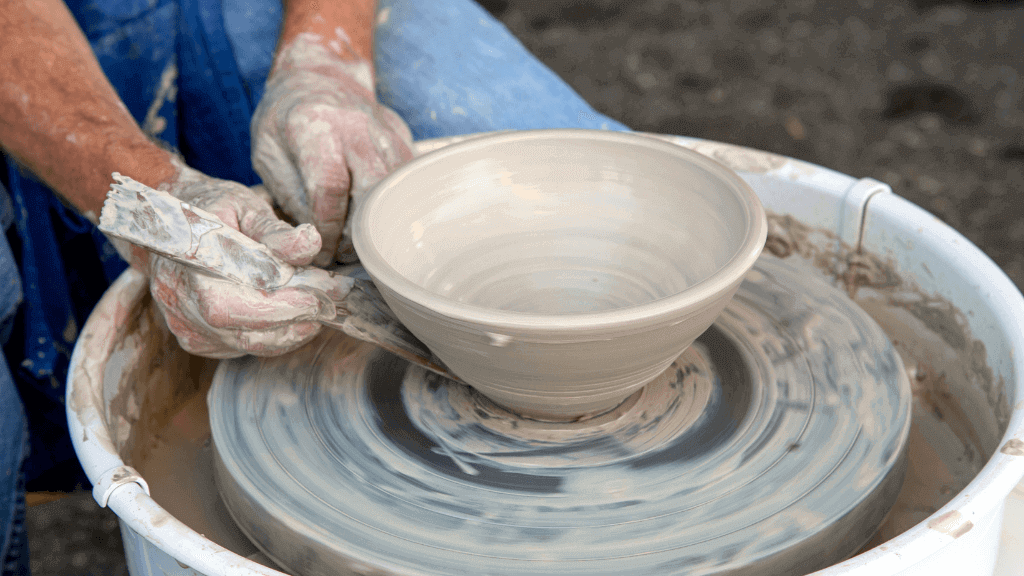
Yes, you can take ceramics on a plane. The TSA allows ceramic items in both carry-on and checked baggage, and security agencies in most countries do the same. Finished, fired ceramics aren’t a restricted item. They’re just fragile, and how you pack them decides whether they make it home in one piece.
My standard advice: carry it on. The overhead bin is the gentlest ride in the airport. Anything fragile, valuable, or handmade belongs in the bag at your feet, not in the cargo hold where it gets thrown and stacked.
Are ceramics allowed through TSA security?
Ceramics are allowed. There’s no quantity limit, no permit, and nothing to declare at a domestic security checkpoint. A glazed bowl, a tile, a figurine, a dinner plate, all of it clears screening as ordinary fragile cargo.
A few things worth knowing before you reach the conveyor belt:
- Solid ceramics look dense on the X-ray. A thick-walled vase or a heavy sculpture can show up as a dark, opaque blob that an officer can’t read. That sometimes earns the piece a hand inspection. It’s routine, not a problem, but it goes faster if you can unwrap and rewrap the piece without cutting through ten layers of tape.
- Sharp or pointed pieces are at the officer’s discretion. A ceramic with a spike, a broken rim, or a knife-like edge can be refused at the checkpoint and sent to your checked bag. TSA officers have the final call regardless of the general rule.
- Glaze on finished ware is not a liquid. Once a piece is glaze-fired, the glaze is glass fused to the clay. There’s no liquid-glaze restriction on finished ceramics, so a glazed mug isn’t subject to the 3.4 oz (100 ml) rule. Bottled liquid glaze you’re carrying as a supply is a different story; that’s a liquid and goes in checked baggage.
- Empty means empty. A ceramic jar is fine, but fill it with honey or oil and the contents count as a liquid. The container being ceramic doesn’t exempt what’s inside.
If your trip is the more general “can I fly with my pottery at all” question, I cover the whole picture, clay and greenware included, in can you take pottery on a plane.
Ceramics in carry-on vs. checked baggage
Carry-on, whenever the piece fits inside your airline’s size limit. The difference in handling is night and day.
| Carry-on | Checked baggage | |
|---|---|---|
| Allowed by TSA? | Yes | Yes |
| Who handles it | You, the whole way | Machines and baggage handlers |
| Breakage risk | Low if wrapped well | High without a rigid box inside |
| Size limit | Roughly 22 x 14 x 9 in. on most US airlines | Usually 62 linear inches, 50 lb |
| Best for | Mugs, plates, bowls, small figurines | Large pieces that won’t fit up top |
| If it breaks | Your packing, your lesson | Airlines routinely deny fragile-item claims |
That last row is the one people learn the hard way. Most airline contracts of carriage exclude liability for fragile items in checked bags, even when rough handling caused the break. If a checked ceramic arrives in pieces, you usually have no claim.
So the rule of thumb is simple. Fragile, valuable, or handmade ceramics go in carry-on. If a piece is too big for the overhead bin, don’t force it into a checked suitcase. Ship it instead, double-boxed and insured. I walk through that method in how to ship pottery, and a well-packed shipment beats a checked bag almost every time.
How to pack ceramics for a flight
One mug or a full dinner set, the principle is the same: immobilize each piece, then cushion the whole bundle so nothing touches the suitcase shell.
- Stuff hollow forms. Pack crumpled paper or balled-up socks inside mugs, bowls, vases, and teapots. A hollow piece flexes and cracks; a stuffed one resists impact from the inside.
- Pad the weak points first. Wrap handles, spouts, rims, and feet on their own before wrapping the body. Those are the parts that snap before anything else.
- Use 2 to 3 layers of bubble wrap per piece. Roll the piece so the wrap can’t unravel, and tape the wrap to itself rather than to a glazed surface.
- Stack plates on edge, never flat. Wrap each plate individually, then stand them vertically like records in a crate. A flat stack puts all the impact force on the bottom plate; standing them up spreads it.
- Keep ceramic surfaces from touching. No two glazed pieces should rest against each other. Clothing makes excellent padding between them, and it’s already in your bag.
- Center the bundle. Leave at least 2 inches of soft buffer on every side so nothing sits against the hard suitcase wall.
- In carry-on, keep it reachable. If an officer wants a look at a dense piece, you want to lift out one wrapped item, not dig through your whole bag at the belt.
For checked ceramics, go further than this. Put the wrapped pieces inside a rigid box, then nest that box in a hard-sided suitcase with padding all around it. The cold cargo hold itself won’t hurt fired, glazed ware. Impacts are what kill ceramics, and a rigid inner box is the only thing that reliably stops them.
Carrying handmade or studio ceramics
Handmade pieces deserve carry-on, full stop. A piece you threw yourself or bought from a studio potter is irreplaceable, and the airline won’t pay you a cent if it breaks in a checked bag.
Two extra notes for studio ware:
- Thin-walled and unglazed pieces are more fragile. A delicate porcelain cup or a bisque-fired piece (earthenware bisque fires around cone 06 to 04, roughly 1,828 to 1,945°F / 998 to 1,063°C) has less impact resistance than a chunky glazed stoneware mug. Give thin or unglazed work extra wrap.
- Never fly with greenware. Unfired, bone-dry clay can crumble from vibration alone. If you’ve made something at a workshop and it isn’t fired yet, have it fired before you travel or accept that it may not survive. Stoneware doesn’t reach maturity until cone 5 to 10 (about 2,167 to 2,381°F / 1,186 to 1,305°C), and only fired ware is sturdy enough for a flight.
If a handmade piece does break in transit, don’t toss the fragments right away. A clean break is often repairable, and even shards have a second life. I cover both in what to do with broken pottery.
Ceramics vs. pottery: does the rule change?
It doesn’t. The terms get used loosely, and for air travel they’re treated identically. “Pottery” and “ceramics” both mean fired clay objects, and the TSA doesn’t draw a line between a hand-thrown mug and a factory-made plate. If you want the full breakdown of where the words overlap and where they don’t, I go into it in is pottery and ceramics the same thing.
The practical takeaway: every rule above applies whether you call your piece ceramics, pottery, stoneware, earthenware, or porcelain. Porcelain (fired around cone 8 to 12) tends to be thinner and a bit more brittle, so it earns the most careful wrapping, but it flies under the same rules as everything else.
Flying internationally with ceramics
Security screening abroad treats ceramics about the same as the TSA does. Two extra layers come into play once you cross a border.
- Customs on the way home. Ceramics you bought abroad count toward your duty-free personal exemption coming back into the US (commonly $800 per person). Declare them on your customs form. Ordinary souvenir purchases under the exemption clear without duty.
- Antiques and cultural property. Several countries (Mexico, Peru, Turkey, Greece, and Egypt among them) restrict the export of ancient or pre-Columbian ceramics. A market-stall mug is no issue. Anything sold as “ancient” or excavated can be seized at the border, and you can be fined. Buy from reputable shops and keep the receipt.
- Tighter carry-on limits. Many European and Asian carriers cap carry-on weight at 15 to 22 lb (7 to 10 kg), which a bag of plates blows past quickly. Check your specific airline before you assume US-style allowances.
One food-safety note for tableware bought abroad: older or tourist-market glazes can contain lead, which leaches into food and drink. A decorative shelf piece is fine, but test before you eat or drink from anything imported or antique. Inexpensive lead test kits run a few dollars and settle the question fast.
What goes wrong, and how to avoid it
- Handle snapped off a mug: the handle wasn’t wrapped on its own. Pad handles as a separate zone, then wrap the whole piece.
- Plate cracked in a checked bag: it was packed flat in a soft suitcase. Stand plates on edge, center them, and use a rigid box.
- Held up at security: a dense piece was taped into a solid cocoon that had to be cut open. Wrap so a piece can be opened and re-closed.
- Hairline crack found weeks later: a stress crack from an impact in transit. Check pieces carefully on arrival, because a hairline can grow with heating or use.
FAQ
Can you take ceramics on a plane in carry-on?
Yes. The TSA allows ceramics in carry-on with no quantity limit. The only caveats are that pieces with sharp edges or points can be refused at an officer’s discretion, and the piece has to fit your airline’s carry-on size limit. Carry-on is the safest place for anything fragile or valuable.
Can you bring ceramics on a plane in checked baggage?
Yes, ceramics are allowed in checked bags, but it’s riskier. Baggage gets thrown and stacked, and airlines generally exclude fragile items from damage claims. If you must check ceramics, pack them in a rigid box inside a hard-sided suitcase, and consider shipping valuable pieces instead.
Are ceramic plates and mugs allowed through airport security?
Yes. Empty ceramic plates, mugs, bowls, and cups are allowed in both carry-on and checked bags. Stuff the inside of mugs, wrap handles separately, stack plates on edge, and expect that a large dense plate may get a quick hand inspection on the X-ray.
Do I need to declare ceramics at customs?
Not at security on a domestic flight. On international trips, ceramics you bought abroad must be declared on your customs form when you return to the US, where they count toward your personal duty-free exemption (commonly $800 per person).
Is it better to carry on, check, or ship ceramics?
Carry on anything that fits in the overhead bin, since you control the handling the whole way. For pieces too large to carry on, ship them double-boxed and insured rather than checking them. Checked baggage is the last resort for fragile ceramics because broken pieces usually aren’t covered.