
Potter vs. Ceramicist: What's the Difference?
By Linda · · 7 min read
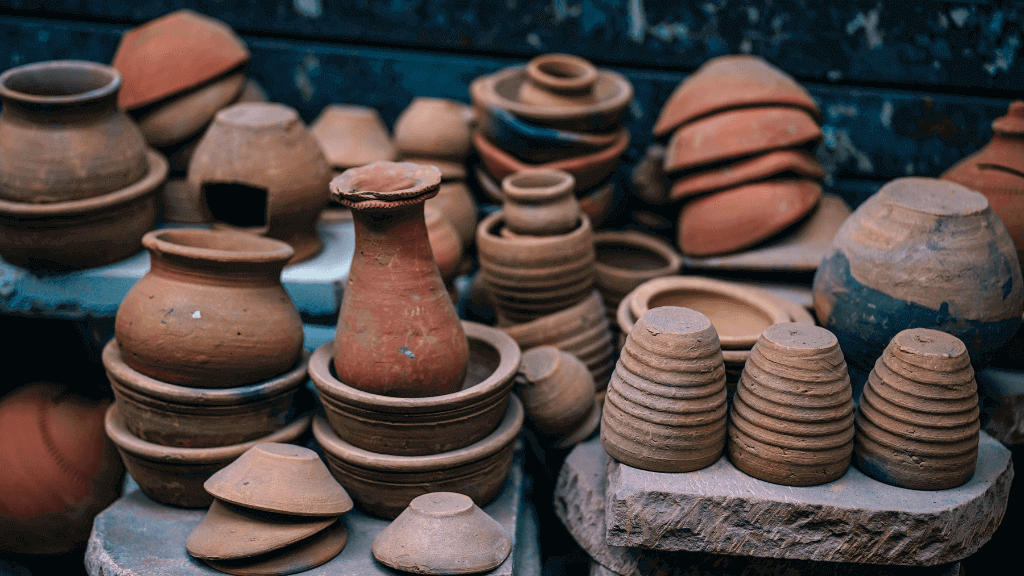
A potter makes pottery, meaning functional clay vessels like mugs, bowls, and vases, usually thrown on a wheel. A ceramicist works with ceramic materials more broadly, and that includes sculpture, art objects, and even technical ceramics. So the simplest rule: a potter is a kind of ceramicist, but a ceramicist isn’t always a potter.
The overlap is large, and plenty of people use the two words interchangeably without anyone blinking. The distinction is one of scope and tone. “Potter” sounds like the craft and the wheel. “Ceramicist” sounds broader, a little more academic, and a little more fine-art.
Potter vs. ceramicist at a glance
| Potter | Ceramicist | |
|---|---|---|
| What it covers | Functional clay vessels, usually thrown | Anything made from ceramic material |
| Typical work | Mugs, bowls, plates, vases, planters | Pottery, sculpture, tile, art objects, industrial ceramics |
| Where you hear it | Studios, craft fairs, wheel classes | Galleries, art schools, museum labels |
| Tone | Craft, hands-on, traditional | Broader, often fine-art or academic |
| Method | Mostly wheel throwing and hand-building | Any forming method, including casting and modeling |
A test I give students: if the work is meant to be used, “potter” fits. If the work leans sculptural or gallery-bound, “ceramicist” or “ceramic artist” usually reads better. Both are correct for someone who throws mugs. One just carries a different weight.
What does “potter” mean?
A potter shapes clay into pots and fires them in a kiln. The word has been around for centuries and points squarely at functional ware: things that hold food, water, or a plant.
Most potters work at the wheel, though hand-building counts too. If you pinch, coil, or slab-build bowls and mugs, you’re still a potter. The wheel is one tool, not the definition.
In my experience, working potters rarely fuss over labels. I call myself a potter because most of what I make is meant to be used. It’s the plainest, most honest word for the job. For a fuller breakdown of the related terms, I wrote a companion piece on what do you call someone who makes pottery.
What does “ceramicist” mean?
A ceramicist works with ceramic materials, which is a wider net than pottery. Ceramics covers any non-metallic mineral object hardened by heat: pots, yes, but also tiles, sculpture, figurines, and technical parts like insulators.
So a ceramicist might:
- Throw functional pots (which also makes them a potter)
- Build sculptural pieces that were never meant to hold anything
- Press or cast tiles
- Develop glaze recipes or clay bodies
- Work in industrial or technical ceramics
Because the word reaches further, it shows up more in galleries, museum labels, and art-school catalogs. A friend who shows figurative sculpture in galleries calls herself a ceramicist. She’d never say “potter,” because she doesn’t make pots. The work tells you which word fits. If you’re still sorting out where pottery ends and ceramics begins, I cover that line in is pottery and ceramics the same thing.
Ceramist vs. ceramicist: which spelling is right?
Both are correct. “Ceramist” is the older, shorter form, and “ceramicist” came later by adding the “-ist” to “ceramic.”
In practice:
- Ceramicist is more common in everyday American usage and in casual writing.
- Ceramist shows up more in academic, industry, and museum contexts, and dictionaries often list it first.
Neither is wrong, and neither carries a different meaning. Pick the one that sounds right to your ear and stay consistent. I lean toward “ceramicist” because it’s what most people around me say, but you’ll see “ceramist” on plenty of gallery walls and never think twice about it.
What about “ceramic artist”?
“Ceramic artist” is the art-world term. It signals that the work is primarily artistic expression rather than functional ware, and it reads as the most formal of the bunch.
You’ll see it on exhibition labels, artist statements, and gallery bios. Someone who sculpts in clay and shows in galleries almost always uses “ceramic artist” or “ceramicist,” partly because it describes the work and partly because the art world takes the term seriously.
Here’s how the three sort out:
- Potter: makes functional clay vessels, usually thrown
- Ceramicist / ceramist: works with ceramic material broadly, functional or not
- Ceramic artist: makes clay work that’s primarily art, often sculptural
If you don’t know what someone makes and need a safe catch-all, “ceramic artist” works. It flatters and it rarely offends.
Is a potter the same as a ceramicist?
Not exactly, though they overlap heavily. Every potter is a ceramicist, because pottery is a branch of ceramics. But not every ceramicist is a potter, because plenty of ceramic work isn’t pottery at all.
Picture it as nested circles. Ceramics is the big circle. Pottery sits inside it. A potter lives in the inner circle; a ceramicist roams the whole thing.
Where it gets blurry is the huge middle ground of people who throw functional pots and also build the occasional sculpture. Most of us. We answer to either word, and we don’t lose sleep over which one a stranger picks.
Which word should you use?
For most situations it honestly doesn’t matter, and you can use whichever feels natural. The choice starts to count in a few specific places:
- Describing yourself. If you make mugs and bowls, “potter” is plain and accurate. If your work is sculptural or you want a more fine-art tone, “ceramicist” or “ceramic artist” fits.
- Selling your work. At craft fairs and online, “pottery” reads functional and rustic, while “ceramics” reads slightly more fine-art. Use the word your buyers search for.
- Choosing a class. A “pottery” class usually means the wheel and functional ware. A “ceramics” class often means a broader curriculum with hand-building and sculpture. Read the description, not just the title.
- Writing a gallery bio. “Ceramicist,” “ceramist,” or “ceramic artist” all carry more weight in that setting than “potter.”
None of these are hard rules. They’re the soft conventions of the craft, and breaking them costs nothing.
A quick note on where these words came from
The word “ceramic” comes from the Greek keramos, meaning “potter’s clay.” So at the root, the two ideas were the same thing: clay shaped and fired.
The split happened later, when industry and fine art started making heat-hardened objects that had nothing to do with vessels. Tiles, insulators, sculpture, technical parts. “Pottery” stayed tied to the functional pot, and “ceramics” stretched to cover everything else fired clay could become. That history is part of why pottery has held its appeal across so many cultures, something I dig into in why is pottery so popular.
Does any of this make pottery less of an art?
No. The word you choose doesn’t decide whether the work is art. A thrown mug with a thoughtful form and a beautiful glaze is art by any honest measure, even though “potter” sounds humble next to “ceramic artist.”
Functional and artistic aren’t opposites in clay. A teapot can be both useful and a sculpture you’d happily put on a shelf. The label sorts the emphasis, not the worth. If you want my full take on that debate, I made the case in is pottery an art.
FAQ
Is a potter the same as a ceramicist?
They overlap but aren’t identical. A potter makes functional clay vessels, usually thrown on a wheel. A ceramicist works with ceramic materials more broadly, including sculpture and art objects. Every potter is a ceramicist, but not every ceramicist makes pottery.
What do you call someone who makes ceramics?
A ceramicist or ceramist. Both spellings are accepted. Ceramics is broader than pottery, so the term covers tile makers and clay sculptors as well as potters.
Ceramist vs. ceramicist, what’s the difference?
There’s no difference in meaning. “Ceramist” is the older, shorter form, and “ceramicist” is the longer variant. “Ceramist” appears more in academic and museum writing, while “ceramicist” is more common in casual American usage.
Is a ceramicist better than a potter?
Neither is better. They describe different scopes of work, not different skill levels. A masterful potter and a masterful ceramicist are both highly skilled; the words just point at what kind of clay work they do.
What’s the difference between a ceramicist and a ceramic artist?
“Ceramicist” covers anyone working in ceramic material, functional or artistic. “Ceramic artist” specifically signals work made primarily as art, often sculptural and gallery-bound. A ceramic artist is a ceramicist, but the term leans more firmly toward fine art.
Should I call myself a potter or a ceramicist?
If you make functional ware like mugs and bowls, “potter” is the plainest, most accurate word. If your work is sculptural or you want a more fine-art tone, “ceramicist” or “ceramic artist” fits better. Both are correct for most makers, so use whichever suits your work and the setting.